
Reviewed · MOUNTAIN HIKES & ROCK CLIMBING
Small Group Hiking on Mount Akramitis in Rhodes
Caves and mountain views, all in one hike. This Mount Akramitis outing strings together Limeri Cave with a WWII-era partisan and radio-station stop, then finishes with a summit panorama where the green meets the Aegean blue. I like the mix of forest walking and big viewpoint payoff, and I also like that the trip is small enough (max 8) for your guide to keep answering questions.
The main catch is the effort level. You’re looking at about 10 km with roughly 500 m of altitude gain, plus a mainly stony descent, so you’ll want solid shoes and a steady pace.
In This Review
- Key highlights you’ll feel on this hike
- Mount Akramitis hiking: why this route feels different on Rhodes
- Price and group size: what $57.67 gets you
- Getting to Ataviros: how the start works and why it’s easy
- The forest approach to Limeri Cave: what you’ll notice on the walk
- Limeri Cave: WWII espionage under the mountain
- Ag.Ioannis Church: a small pause before the summit effort
- Mount Akramitis summit: green meets the Aegean blue
- The stony descent: how to finish without wobbling
- What to bring for a 10 km, 500 m hike in Rhodes
- Who should book this Mount Akramitis hike?
- Book it or skip it? My practical verdict
- FAQ
- How long is the Mount Akramitis hike?
- How difficult is it?
- Is pickup included?
- What group size is this tour?
- What language is the tour offered in?
- What happens if the weather is bad?
Key highlights you’ll feel on this hike
- Limeri Cave: a WWII espionage base tied to partisan movements and a radio station
- St John (Ag.Ioannis) stop: a calm landmark before you push for the top
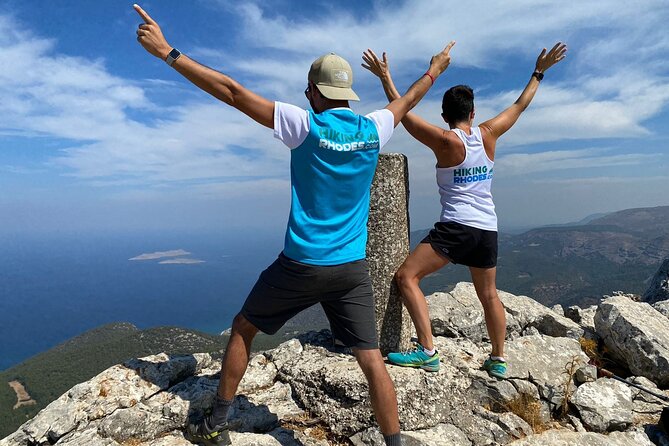
- Mount Akramitis summit views: the big panorama moment, with sea-and-forest views
- NATURA 2000 protection: pine and cypress forest plus unique wild flora and fauna ecosystems
- Small group energy: maximum 8 travelers, so it’s easier to move together comfortably
- Guide-led interpretation: guides like Manuela are praised for history, plants, and nature knowledge
Lace up: more mountain hikes and climbs above Rhodes
- Lindos: Submarine Cruise with Swimming Stop at Navarone Bay★ 4.7 · 120 reviews
- Small Group Hiking on Mount Akramitis in Rhodes★ 5.0 · 45 reviews
- Rhodes: Ladiko Bay Rock Climbing and Rappelling Experience★ 5.0 · 39 reviews
- Rock Climbing & Rappelling for the real thrill seekers!★ 5.0 · 38 reviews
Mount Akramitis hiking: why this route feels different on Rhodes
Rhodes isn’t only about beaches. This hike gives you the island from the inside—wooded trails, protected habitat, and a mountain top view that feels like a reward you can earn.
What makes this one stand out is the storyline. You start walking through forest, then reach Limeri Cave, which was important during the Second War as an espionage base connected to partisan movements and a radio station. After that, the route keeps moving toward the summit, with Ag.Ioannis (St John) acting like a pause point before the final pull up.
And the nature angle is real, not just marketing. The Mount Akramitis area is part of the European habitat network NATURA 2000, and it’s protected as a natural monument because of both the terrain and the dense pine and cypress forest. You’re not just walking near trees—you’re in a zone that’s managed for unique ecosystems of wild plants and animals.
Price and group size: what $57.67 gets you
At about $57.67 per person for roughly 5 hours, this hike is priced like a straightforward guided experience, not a luxury day. The value comes from three practical things:
First, you’re not stuck in a crowd. The group is limited to a maximum of 8 travelers, which usually means less waiting, fewer bottlenecks on narrow trail sections, and a better chance your guide can explain what you’re seeing.
Second, you get pickup from hotels or apartments/villas. That matters in Rhodes, where getting to trailheads by bus or on your own can be hit-or-miss depending on where you’re staying. Pickup also makes a half-day feel simpler.
Third, you’re paying for interpretation. The guide role is a big part of the experience. Reviews highlight guides like Manuela for being professional, friendly, and strong on local history and nature—history at Limeri Cave, plus plants and the protected habitat on the slopes.
If you want a hike where someone handles the logistics and adds meaning to what you’re walking past, this price feels reasonable.
Getting to Ataviros: how the start works and why it’s easy
The activity starts and ends at the meeting point in Ataviros (listed as 8G894QV2+C8W4QV2+C8W). The tour duration is about 5 hours and ends back at the same meeting point.
Most days, pickup is the difference between a smooth morning and a stressful one. Here, pickup is offered from hotels or apartments/villas, and you’ll receive confirmation at booking. That means you can plan your day without needing to map out a separate route to the trailhead.
One more small thing: this uses a mobile ticket, so you’re not trying to juggle paper directions. Bring your phone charged, and keep the ticket easy to find.
The forest approach to Limeri Cave: what you’ll notice on the walk
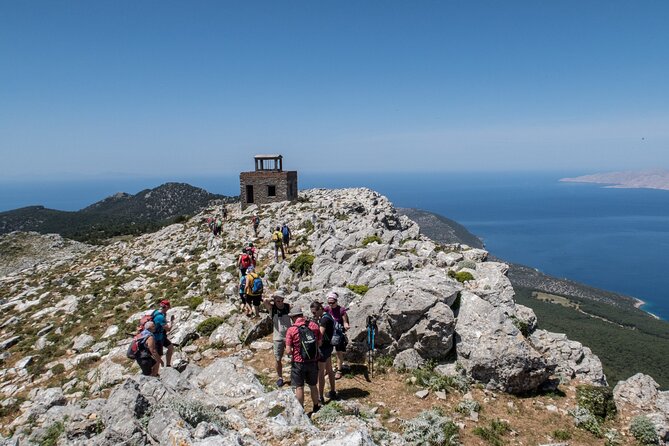
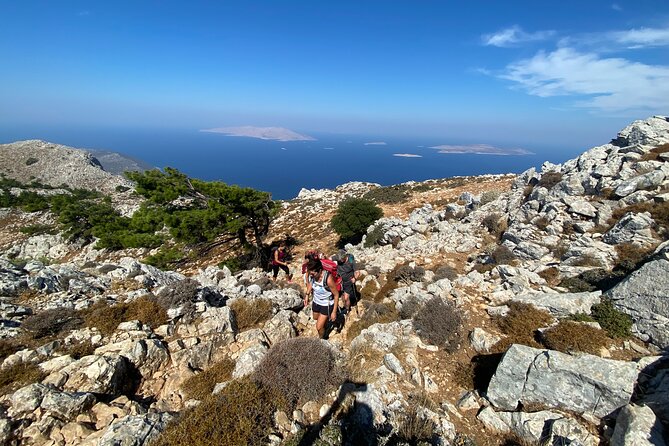
The hike route is about 10 km with around 500 m of altitude difference. Translation: it’s not a casual stroll, but it’s also not a full-on alpine climb. The terrain is described as an enchanting path through the woods, so you’ll likely spend a good chunk of the early day in shaded or semi-shaded walking.
This is the section where you set your rhythm. For me, the ideal hiking plan is simple: start slightly slower than you think you need, let your breathing settle, and save your energy for the viewpoints.
As you go, your guide should be able to point out the local plant life and the kind of habitat the area protects. The region’s dense pine and cypress forest is part of why it’s included in NATURA 2000, and those trees tend to shape both the trail feel and the sights you get as the route climbs.


Limeri Cave: WWII espionage under the mountain
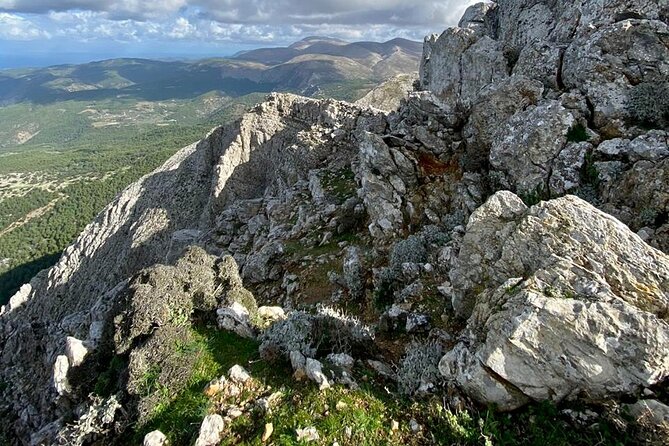
Reaching Limeri Cave is a memorable turning point because it shifts the hike from scenery to story.
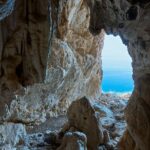
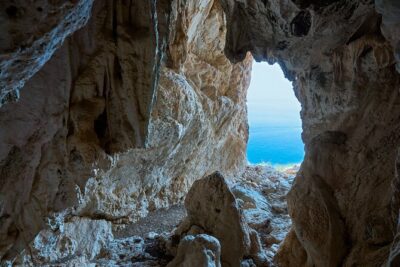
Here’s what you should expect to learn about: the cave was important during the Second War. It served as an espionage base for partisan movements and it was home to a radio station. That detail changes how you see the mountain. You’re not just passing a landmark—you’re stepping into a place that once played a role in communications and resistance.
Practical advice for cave stops: wear footwear with confident traction. Even if you’re only pausing and looking, cave approaches and surfaces can be uneven. Also, be ready for a cooler feel around stone spaces than you have outside—pack with layers in mind so you’re comfortable when you stop.
This is the kind of stop that makes a guided hike feel worth it. Without the context, it’s just a cave in a mountain. With the context, it becomes part of Rhodes’ wartime geography.
Ag.Ioannis Church: a small pause before the summit effort
After Limeri Cave, the route continues past the small church of Ag.Ioannis (St John). This is a short, low-pressure moment in the day, but it helps in two ways.
First, it gives you a mental reset. The climb has energy, and then you hit a calmer landmark before pushing higher.
Second, it’s a navigation and rhythm marker. Churches and chapels often sit at natural turning points—places where trails open up or where you can regroup. If your guide is managing timing for the whole group (especially with a max of 8), this kind of pause helps keep everyone together.
Don’t treat it like a museum stop. Treat it like a breath of air before the summit push.
Mount Akramitis summit: green meets the Aegean blue
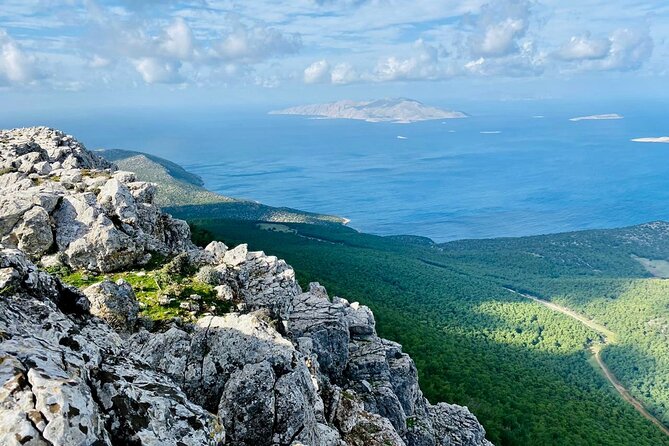
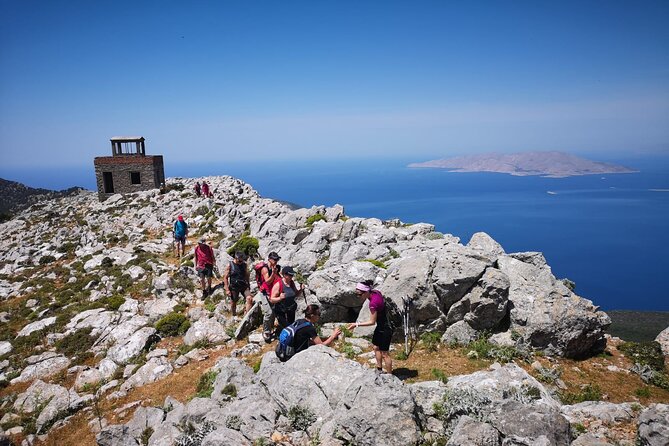
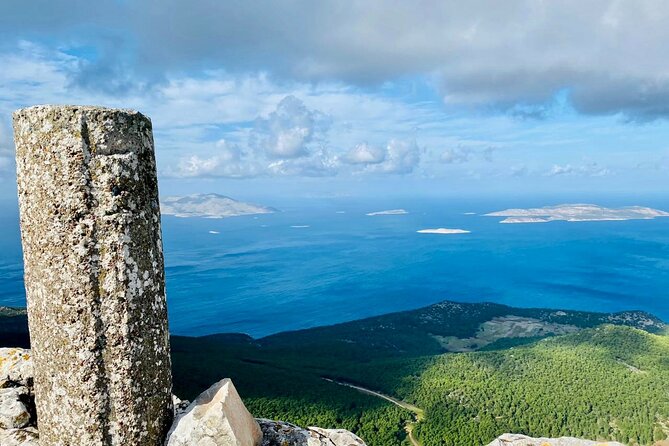
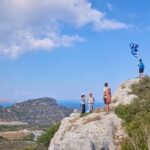
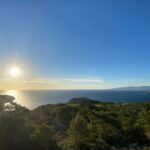
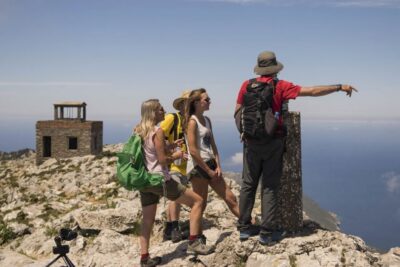
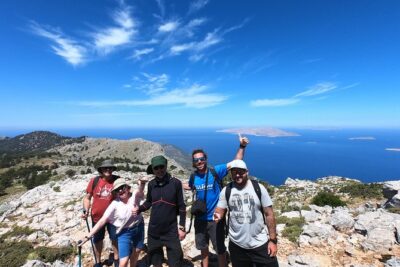
The top of Mount Akramitis is the payoff. This is described as the second mountain on the island, and it’s where the view spreads out: green forest and Aegean blue beyond it.
This is also where you’ll feel why the route calls for a strong athletic preparation. You’re climbing enough to earn the panorama, and then you’re rewarded with an expansive outlook over the island.
A good guide makes this moment better. Reviews specifically praise guides like Manuela for answering questions about history, plants, and nature during the walk, and that kind of explanation tends to peak when you’re at a viewpoint. If the guide points out species in the surrounding area or explains why the habitat is protected, the summit becomes more than photos—it becomes understanding.
Photo tip, plain and practical: take a couple of wide shots first, then circle slightly for second angles. Summit views can look different as you move even a few steps, especially where the trail topography changes.
The stony descent: how to finish without wobbling
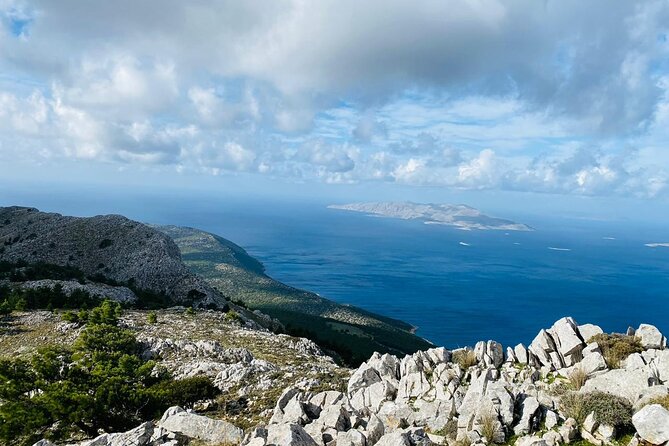
The descent passes through mainly stony paths and still includes fascinating views. This is where many people overdo it. They feel the climb is done, speed up, and then their footing slips.
Keep it controlled. Short steps help on rocky ground, and you’ll want shoes that grip well. If you tend to get knee fatigue downhill, consider slowing down before the stoniest sections so you don’t end up fighting your legs at the end of a long 10 km loop.
Even on the descent, you’ll have chances to look back. The views aren’t just for the top. As you come down, the angle changes and you may notice how the forest and mountain shapes lead the eye toward the coast.
What to bring for a 10 km, 500 m hike in Rhodes
You should plan for an athletic day. The tour explicitly says travelers need strong physical fitness, and the route includes altitude gain plus a stony descent.
So pack like it’s a real hike:
- Comfortable hiking shoes with traction for rocks
- Water (bring enough for a half day; don’t assume you can buy it on route)
- A hat and sun protection, especially if cloud cover is thin
- Light layers, since conditions can change between forest shade and open viewpoints
- A phone battery boost if you’re relying on your mobile ticket and photos
Also note the weather rule: this experience requires good weather. If conditions are poor, the hike can be rescheduled or refunded—plan flexibility helps.
Who should book this Mount Akramitis hike?
This is a great fit if you want Rhodes that’s active, outdoorsy, and story-based.
You’ll likely enjoy it most if:
- you like hiking but still want a full stop-and-look itinerary (cave, church, summit)
- you’re curious about how places were used historically, not just what they look like now
- you want a small group day rather than a big tour bus feel
- you can handle rocky trail sections and a real climb (about 500 m gain)
If you prefer flat walks, or if rocky descents make you nervous, this may feel too demanding.
Book it or skip it? My practical verdict
I’d book this hike if you’re the kind of traveler who wants one good day that combines natural protection (NATURA 2000) with real place-based history at Limeri Cave, then finishes with a summit view that makes the effort feel fair.
I’d hesitate if you’re not comfortable with an athletic 10 km / 500 m effort, or if you know you struggle on stony downhill paths. This isn’t a gentle nature stroll, even though it’s paced for a small group.
If you fit the fitness side and you want guided context—history, plants, and the reasons the area is protected—this is an easy yes.
FAQ
How long is the Mount Akramitis hike?
The hike lasts about 5 hours (approximately).
How difficult is it?
It includes about 10 km of hiking and roughly 500 m of altitude difference, with a mainly stony descent. You should have strong physical fitness.
Is pickup included?
Yes. Pickup is offered from hotels or apartments/villas, and the tour starts and ends back at the meeting point in Ataviros.
What group size is this tour?
The maximum group size is 8 travelers.
What language is the tour offered in?
It is offered in English.
What happens if the weather is bad?
This experience requires good weather. If it’s canceled due to poor weather, you’ll be offered a different date or a full refund.
More Rhodes Tours to Browse




More Hikes Above the Coast
Not quite this one? A few more Rhodes trips we have written up




Mountain Hikes & Rock Climbing, compared.
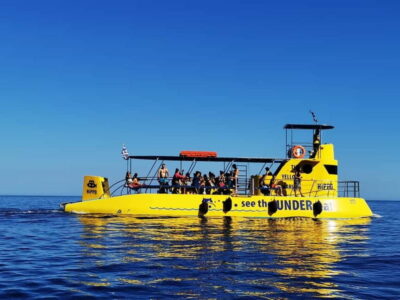 ★ 4.7Lindos: Submarine Cruise with Swimming Stop at Navarone BayFrom $32120 reviews
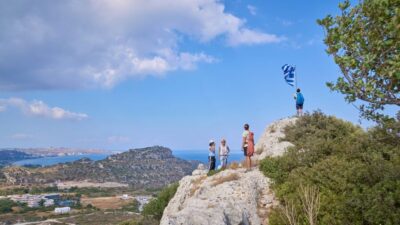 ★ 5.0Ladiko Bay Rock Climbing and Rappelling ExperienceFrom $14139 reviews
 ★ 5.0Rock Climbing & Rappelling for the real thrill seekers!38 reviews
 ★ 4.9Profitis Ilias Guided Sunset HikeFrom $5834 reviews
 ★ 5.0Small Group Hiking Sunset in MonolithosFrom $5733 reviews
 ★ 4.9Hiking Tour to the Summit of Akramitis with PhotosFrom $6628 reviews
 ★ 5.0Guided hike to the seven springs from ArchangelosFrom $4326 reviews
 ★ 5.0Hiking Mountain Akramitis Rhodes – pick up service availableFrom $7823 reviews
Browse the lists this tour appears in